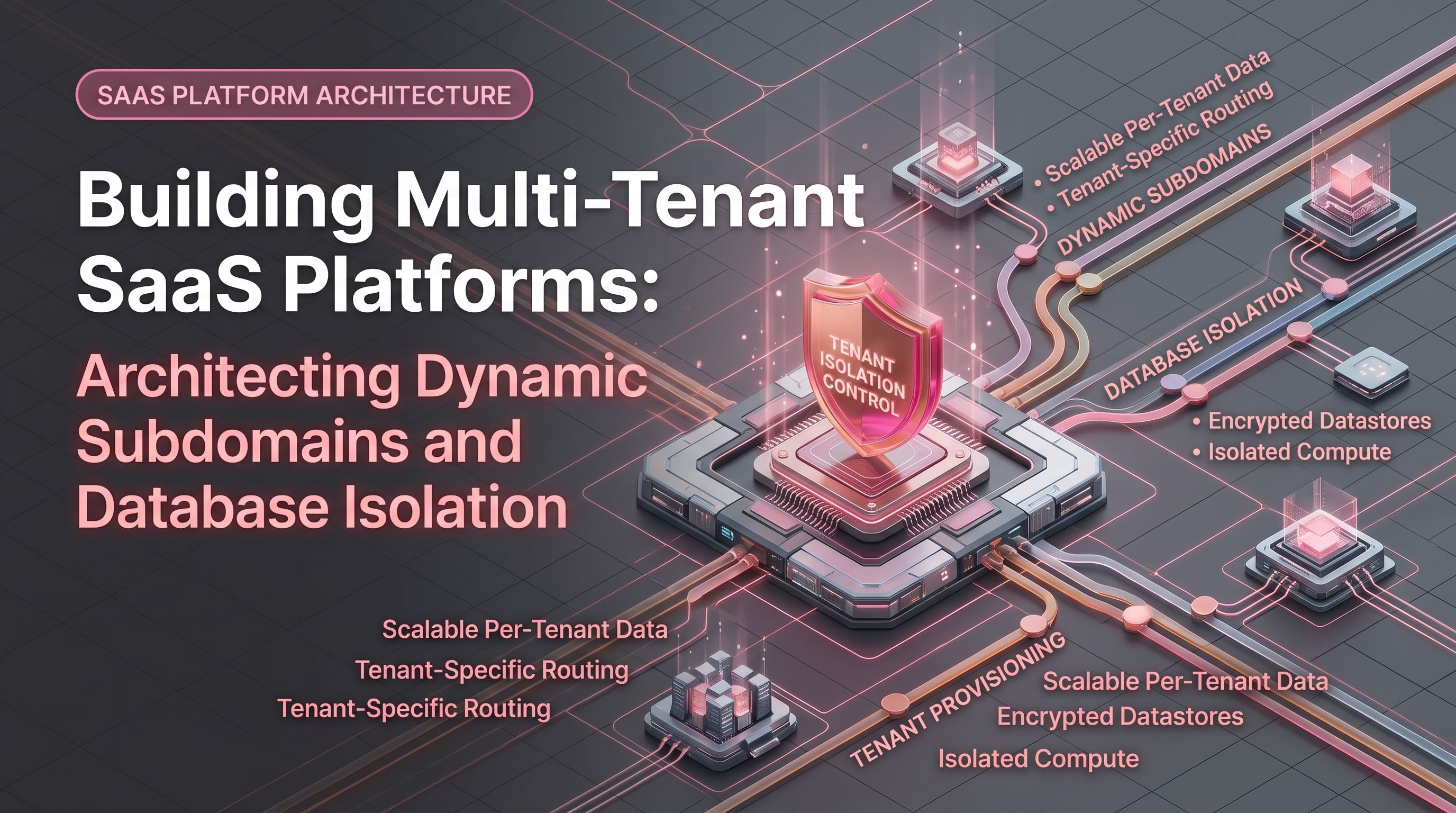
Building Multi-Tenant SaaS Platforms: Architecting Dynamic Subdomains and Database Isolation
Introduction to Multi-Tenancy Architecture
When designing modern Software-as-a-Service (SaaS) products—such as multi-store e-commerce platforms, white-label clinic management suites, or enterprise school management portals—the foundational architectural decision centers on tenancy modeling.
A properly engineered Multi-Tenant System allows thousands of individual business clients (tenants) to share the same underlying application infrastructure while keeping their branding, routing, and data strictly isolated, secure, and accessible via unique custom subdomains (e.g., tenant1.platform.com, tenant2.platform.com) or custom root domains.
1. Routing Traffic: Dynamic Subdomains & Wildcard DNS
The initial entry point of any multi-tenant system is request resolution at the edge. The system must determine which tenant is making the request before rendering UI or querying the database.
A. Wildcard DNS & Edge Proxy Configuration
Configure a wildcard DNS record (*.platform.com -> Load Balancer / Server IP) across your DNS provider (such as Cloudflare or Route 53). All incoming traffic hitting any subdomain reaches the primary reverse proxy (Nginx) and Node.js runtime.
B. Edge Middleware Host Extraction with Next.js
Using Next.js Edge Middleware (middleware.ts), the application intercepts incoming HTTP requests, extracts the hostname, strips the base domain, and rewrites the internal request path to dedicated tenant routes without triggering a client-side redirect. It skips rewrites for static assets and API routes, directing tenant-specific paths into dedicated tenant views seamlessly.
2. Choosing the Right Database Isolation Strategy
When structuring data storage for multi-tenant applications, engineering teams evaluate three primary data isolation strategies based on compliance, operational cost, and scale:
Strategy 1: Shared Database, Shared Schema (Tenant ID Filtering)
- Architecture: All tenants store records in identical shared tables, with every row indexed by a mandatory tenant_id foreign key.
- Pros: Lowest infrastructure cost, easiest cross-tenant analytics, and effortless database migrations.
- Cons: Risk of accidental data leakage if an engineer forgets a tenant_id filter in raw queries.
- Mitigation: Enforce PostgreSQL Row-Level Security (RLS) policies at the database engine level so the database automatically restricts row visibility to the active session tenant.
Strategy 2: Shared Database, Separate Schemas (PostgreSQL Namespaces)
- Architecture: Tenants share a single physical PostgreSQL database instance, but each client is allocated an isolated schema namespace (e.g., tenant_a.orders, tenant_b.orders).
- Pros: High data isolation, customizable table structures per client, and simplified tenant data export or deletion.
- Cons: Database migrations become resource-heavy as you loop through thousands of independent schemas.
Strategy 3: Database per Tenant (Physical Isolation)
- Architecture: A completely isolated database instance is dynamically provisioned for every registered client.
- Pros: Maximum security compliance, absolute zero cross-tenant query contamination, and independent database backups.
- Cons: Highest operational overhead, connection pool fragmentation, and complex infrastructure orchestration.
3. Dynamic Theme Engines & Client White-Labeling
Modern multi-tenant platforms allow clients to customize branding colors, typography, and visual layout preferences without recompiling assets.
A. JSON-Driven Style Schemas
Store branding preferences as structured JSON in your database rather than generating separate CSS files (defining primary colors, logos, fonts, and dark/light modes).
B. Runtime CSS Variable Injection
Inject theme parameters dynamically into the HTML root container using CSS custom properties (--primary-color). This enables real-time client rebranding with zero build latency and zero JavaScript performance penalty.
4. Operational Best Practices for Production Multi-Tenancy
- Implement Tenant-Aware Rate Limiting: Apply Redis-backed sliding-window rate limiters keyed by tenant_id to prevent one high-traffic tenant from degrading system performance for others.
- Centralize Authentication: Use unified authentication tables with tenant membership mappings, allowing users to belong to multiple organizations using a single set of login credentials.
- Automate Database Connection Pooling: Implement connection poolers (like PgBouncer or Prisma Accelerate) to manage database connections efficiently when scaling across hundreds of concurrent tenant instances.
5. Summary
Architecting a multi-tenant SaaS requires a balanced tradeoff between infrastructure expenditure, tenant data isolation, and edge routing performance. Combining Next.js dynamic edge middleware with PostgreSQL Row-Level Security (RLS) provides a cost-effective, secure foundation to scale from early adopters to thousands of active businesses.