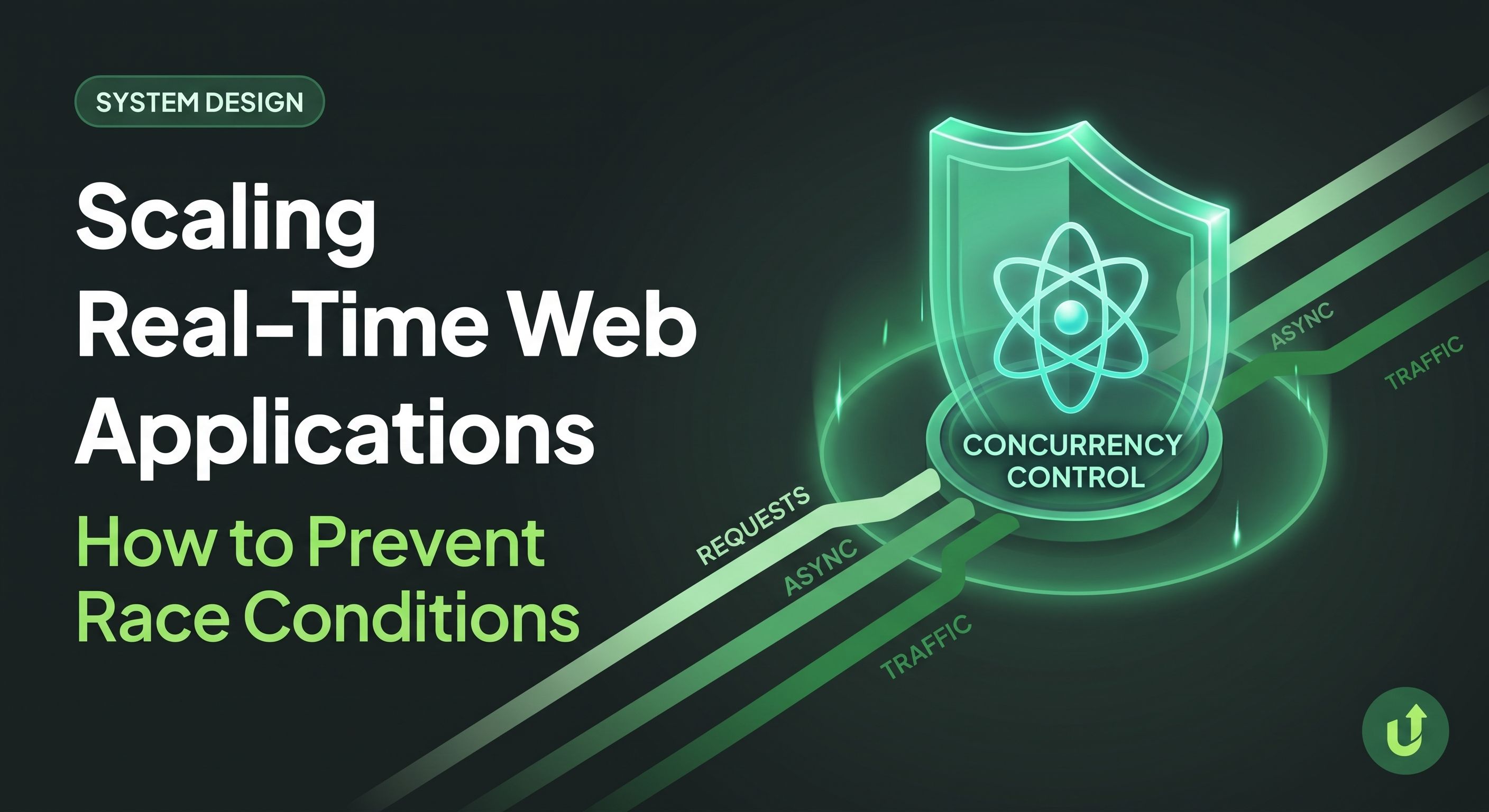
1. Scaling Real-Time Web Applications: How to Prevent Race Conditions in High-Concurrency Systems
The Reality of High-Concurrency Systems
When hundreds or thousands of users interact with a digital platform simultaneously—whether booking premier cinema seats, snagging flash-sale sneakers, or claiming limited in-game vouchers—standard relational database operations inevitably break down.
The core vulnerability in high-traffic applications is the Race Condition: a scenario where two distinct requests check the availability of an asset at the exact same millisecond, both read the state as "Available," and both proceed to write "Reserved" to the database. The result is double-booking, data corruption, and broken customer trust.
1. Why Standard REST Endpoints Fall Short
Traditional stateless REST APIs rely on polling or linear client-server request-response cycles. Under heavy concurrency, this introduces three fatal bottlenecks:
- Polling Overhead: Frequent client-side HTTP polling floods server threads, spiking CPU utilization and exhausting database connection pools.
- Stale State Windows: A client displaying an asset as available based on a response from 2 seconds ago might attempt to purchase an item that has already been bought.
- Database Lock Contention: Standard row-level locking (
SELECT ... FOR UPDATE) can create massive queuing cascades, leading to database timeouts and 504 Gateway errors.
2. The Core Triad: WebSockets, Redis TTL, and Atomic Isolation
To build an unshakeable real-time transactional system, modern architectures decouple immediate state synchronization from permanent transactional persistence:
- Instant State Broadcasting via WebSockets: Using bidirectional WebSocket connections (via Socket.io), every client maintains an open pipeline. The instant a user selects an item, a socket event broadcasts across all active sessions, rendering the item grayed-out or in an "In Selection" state in sub-second timeframes.
- Distributed In-Memory Holding via Redis: Instead of locking persistent database rows immediately, the system provisions an in-memory lock in Redis with a Time-To-Live (TTL) expiration window (e.g., 5 to 8 minutes). This reserves the asset during the checkout process without burdening disk I/O. If the checkout is abandoned, the key expires automatically, releasing the asset back to the pool.
- ACID Persistence with Row-Level Isolation: Once payment is confirmed via an asynchronous webhook, the server executes a parameterized SQL transaction to permanently mark the record as claimed.
3. Key Takeaways for Technical Leaders
- Never rely on frontend validation for real-time stock integrity.
- Decouple live state feedback from disk database writes using in-memory distributed caches.
- Ensure third-party payment integrations rely on idempotent server-to-server webhooks rather than client browser redirects.
2. Headless CMS vs Monolith: Why Next.js and Decoupled APIs Win for Scalable Businesses
The Shift in Modern Web Architecture
For over a decade, traditional monolithic Content Management Systems (CMS) served as the standard blueprint for building corporate websites. However, as digital brands demand sub-second mobile performance, custom user experiences, and multi-channel content delivery (web, mobile apps, digital signage), monolithic architectures have increasingly become a development bottleneck.
Modern digital engineering has decisively shifted toward Headless Architecture—a paradigm where content management and storage are completely decoupled from frontend presentation.
1. The Bottlenecks of Traditional Monoliths
Traditional monolithic platforms tightly couple the database, administrative dashboard, and frontend rendering engine into a single codebase. This introduces structural limitations:
- Performance Degradation: Monoliths render pages on the fly with heavy server-side processing, leading to poor Time-to-First-Byte (TTFB) and sluggish Core Web Vitals scores.
- Security Vulnerabilities: Exposing the entire administrative layer on the same server and domain that handles public web traffic creates a wide attack surface for SQL injections and plugin vulnerabilities.
- High Maintenance Overhead: Updating a simple UI component or styling framework often requires deploying and testing the entire application stack.
2. Core Architectural Advantages of Decoupled Next.js
By separating the content repository (e.g., Strapi, headless backends) from the frontend presentation layer powered by Next.js, engineering teams achieve unparalleled development agility and speed:
- Sub-Second Performance via Incremental Static Regeneration (ISR): Next.js enables developers to generate static HTML pages at build time while updating individual pages in the background when content changes in the CMS—combining the raw speed of static hosting with the flexibility of dynamic data.
- Hardware-Grade Edge Security: Because public users interact strictly with pre-rendered pages hosted across Edge CDN nodes, your internal database and CMS admin dashboards remain completely insulated behind private network firewalls.
- Developer Freedom & Modern Design Systems: Frontend teams can build bespoke user experiences utilizing modern component libraries (React, Tailwind CSS, TypeScript) without being restricted by rigid CMS templating engines.
3. Final Verdict
For emerging startups and enterprise businesses that rely on digital customer acquisition, transitioning to a headless architecture is no longer just a trend—it is a critical foundation for performance, conversion rate optimization, and long-term technical scalability.
3. Building Multi-Tenant SaaS Platforms: Architecting Dynamic Subdomains and Database Isolation
Introduction to Multi-Tenancy
When architecting Software-as-a-Service (SaaS) products—such as multi-store e-commerce builders, white-label booking CRM systems, or school management networks—a core architectural decision is how to serve thousands of unique clients (tenants) efficiently without deploying individual servers for every customer.
A properly designed Multi-Tenant System allows multiple client organizations to share the same underlying application infrastructure while keeping their data strictly isolated, secure, and accessible via custom subdomains (client1.domain.com, client2.domain.com).
1. Routing Traffic: Next.js Dynamic Subdomains & Wildcard DNS
The first layer of multi-tenancy involves routing incoming HTTP requests to the appropriate tenant context based on the requested hostname:
- Wildcard DNS Configuration: Configure domain DNS with a wildcard record (
*.yourdomain.com -> Server IP) routed through Cloudflare or Nginx to ensure all incoming subdomains hit the central application gateway. - Edge Middleware Host Extraction: Using Next.js Middleware (
middleware.ts), the system inspects incoming request hostnames, extracts the tenant subdomain, and dynamically rewrites internal routing paths to the appropriate tenant page directory.
2. Choosing the Right Database Isolation Strategy
When structuring data storage for multi-tenant applications, engineering teams typically choose between two primary models:
- Shared Database with Row-Level Tenant Filtering: All tenants share the exact same tables, with every row indexed by a mandatory
tenant_idforeign key. This provides maximum cost efficiency and scale for small-to-medium tenants while requiring strict database row-level security (RLS) policies. - Database per Tenant: A completely isolated database instance is provisioned for every registered client. This provides total physical data isolation, ideal for enterprise-grade SaaS handling sensitive financial, medical, or legal data.
3. Theme Engines & Dynamic Tenant Styling
Modern multi-tenant platforms allow clients to customize branding colors, typography, and layout preferences.
Instead of compiling individual CSS stylesheets for each tenant, store styling parameters as JSON metadata in the database (primary color, logo URL, font families, theme mode). Inject these variables dynamically into the root document layout using CSS custom properties (--primary-theme-color), enabling instant client rebranding with zero performance penalty.
4. Conclusion
Architecting a multi-tenant SaaS requires a balance between infrastructure cost, tenant data isolation, and routing performance. Combining Next.js edge routing with optimized database schema strategies provides the ideal foundation for scaling from initial tenants to thousands of active businesses.